Agitos Foundation beneficiary Castro aiming for Ecuador’s first Paralympic medal
21.06.2016The T11 runner will make his Paralympic debut at Rio 2016 after taking part in an Agitos Foundation, Rio 2016 and Brazilian Paralympic Committee project.

“After becoming blind, I wanted to die.”
In 2012 Ecuador’s Darwin Castro felt his world had ended when he lost his sight. Aged 16, he was diagnosed with Keratoconus, a progressive eye disease, and despite numerous surgeries, his sight could not be restored.
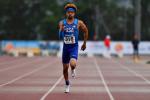
However, Para sport gave him new hope and four years after losing his sight, Castro is optimistic about winning his country’s first ever Paralympic medal at the Rio 2016 Paralympic Games in the 5,000m T11.
“Now, if you ask me if I want to have my eyesight back or to be crowned as Paralympic champion, I choose the latter without a doubt because it is through Para sports that I can inspire people and show them that a disability should not limit you,” said Castro.
The 22-year-old is one of eight athletes from Latin America whose remarkable stories are being told in a series of powerful short road to Rio 2016 films produced by the Agitos Foundation, the International Paralympic Committee’s (IPC) development arm.
Darwin Castro gains a brother and guide. #TeamAgitos - on the Road to Rio
Darwin Castro's life as an athlete. #TeamAgitos - on the Road to Rio
Over the last 18 months, 155 athletes, coaches and classifiers from 23 countries, including Castro, have benefitted from expert training provided during the Road to Rio 2016: Agitos Foundation Sessions. Organised in partnership with the Rio 2016 Organising Committee and Brazilian Paralympic Committee, the sessions aimed to improve coaching and Para sport standards as part of the legacy of Latin America’s first Paralympic Games.
Castro’s story also launches the #TeamAgitos. This aims to raise awareness of the Agitos Foundation by encouraging sport fans, athletes and partners to join the team for developing Para sport by showing their support and sharing their own updates on social media.
Last year Castro took part in an Agitos Foundation training workshop in Sao Paulo, Brazil, and months later won the 5,000m T11 bronze medal at the Toronto 2015 Parapan American Games.
“The Agitos Foundation has given me the opportunity to get to know more about Paralympic sports. It has helped me a lot,” he said.
“I took part in a programme in Sao Paulo, Brazil, and interacted with other athletes with different impairments, which was highly enriching. It has helped me grow as an athlete.”
Rapid progression
Castro has come a long way since he first started losing his sight.
“I have always thought about disabilities as something complex. I became blind during my adolescence, right when a person is discovering and enjoying a whole new world,” Castro said.
“Who I believed were my friends back then, left me. Maybe they thought I was another person.
“At the beginning, it was as if I did not fit in this world. Most of the cities in South America are not accessible enough for people with impairment, and getting out of my house started to be a challenge. Buses sometimes did not stop for me. And I thought ‘things were not like this when I could see.’ ”
Doctors suggested he take up sports as part of the psychological rehabilitation and his reintegration into society. With his family’s invaluable support, Castro gained new confidence.
“I first tried blind football, then swimming and even goalball. But it was when I tried athletics that I noticed I had found my sport,” he said.
Castro’s life noticeably improved when he met his current guide and best friend, Sebastian Rosero.
“I consider Sebastian to be my brother. In fact, once I started to train harder I decided to move to Quito, Ecuador’s capital city, where I have been living with him and his family,” said Castro who is originally from Cuenca.
“I have two families: my biological one, and Sebastian’s. My social circle has even grown since I have acquired my impairment.”
Once in Quito, Castro trained harder and made athletics his way of life.
“I dream and think about athletics during the whole day. I carefully select what I eat to perform better on the track,” he said.
“Athletics is a window to show the world that disabilities are no limit. It is the oxygen I breathe.”
With the support of his family and friends, and a bulletproof self-confidence, Castro now dreams big.
“I want to win Ecuador’s first Paralympic medal,” he said. “I know it is going to be tough and I might not win it in Rio, but I will at some point, hopefully the gold medal in Tokyo [2020].
“If I continue this way, I have no doubts that I will achieve it.”
The Agitos Foundation Road to Rio 2016 videos will feature one athlete per week until the 4 August, to show the compelling stories that exist in Para sport development as part of #TeamAgitos. A final video for each athlete will then be published the week before the Rio 2016 Paralympics begin.
Anyone can use #TeamAgitos on social media to show they are part of the team, whether they are fans, athletes, coaches, part of the Paralympic Movement or a partner organisation.
Clean, broadcast quality versions of all the Castro videos are available free of charge to all media. Requests should be submitted to footage@paralympic.org. The Agitos Foundation must be credited for all use of footage.
SPANISH VERSION:
Castro, beneficiario de la Fundación Agitos, va en búsqueda de su primera medalla Paralímpica
-El atleta categoría T11 hará su debut Paralímpico en Río 2016 tras formar parte de un proyecto de la Fundación Agitos, el Comité Organizador de Río 2016 y el Comité Paralímpico Brasilero .
"Después de quedar ciego, me quería morir.”
El ecuatoriano Darwin Castro sintió que su mundo se había terminado cuando perdió la vista en 2012. A los 16 años, se le diagnosticó queratocono, una enfermedad ocular progresiva, y, a pesar de numerosas cirugías, su vista no pudo ser restaurada.
Sin embargo, el Para deporte le dio nueva esperanza y, cuatro años después de perder la vista, Castro es optimista acerca de ganar la primera medalla Paralímpica de su país en los 5.000m T11 de Río 2016.
"Si usted me pregunta ahora si quiero recuperar la vista o consagrarme campeón Paralímpico, elijo la segunda opción sin dudarlo, ya que es a través del Para deporte que puedo inspirar a la gente y mostrarles que una discapacidad no debe limitar a nadie", dijo Castro.
Con 22 años, es uno de los ocho atletas de América Latina cuyas sobresalientes historias están siendo presentadas en la serie de videos cortos ´Road to Rio 2016´ producidos por la Fundación Agitos, el brazo de desarrollo del Comité Paralímpico Internacional (IPC).
Durante los últimos 18 meses, 155 atletas, entrenadores y clasificadores de 23 países, entre ellos Castro, se han capacitado en las sesiones ´Road to Río 2016: Agitos Foundation´. Este proyecto, organizado en colaboración con el Comité Organizador de Río 2016 y el Comité Paralímpico Brasileño, tuvo el propósito de mejorar los estándares de entrenamiento y deportivos como parte del legado de los primeros Juegos Paralímpicos en América Latina.
La historia de Castro también lanza el #TeamAgitos. Éste tiene como objetivo dar a conocer la Fundación Agitos animando a los aficionados del deporte, atletas y socios a unirse al equipo de desarrollo del Para deporte, mostrando su apoyo y compartiendo sus publicaciones en las redes sociales.
El año pasado, Castro participó en un taller de capacitación de la Fundación Agitos en Sao Paulo, Brasil, y meses más tarde ganó la medalla de bronce en los 5.000m T11en los Juegos Parapanamericanos Toronto 2015.
"La Fundación Agitos me ha dado la oportunidad de conocer más acerca de los deportes Paralímpicos. Me ha ayudado mucho", dijo.
"Participé en un programa en Sao Paulo, Brasil, e interactué con otros atletas con diferentes discapacidades, lo cual fue muy enriquecedor. Me ha ayudado a crecer como atleta".
Rápida evolución
Castro ha recorrido un largo camino desde que comenzó a perder la vista.
"Siempre he pensado en la discapacidad como algo complejo. Quedé ciego durante mi adolescencia, justo cuando una persona está descubriendo y disfrutando de un nuevo mundo", dijo.
"Quienes yo creía eran mis amigos en ese entonces, me dejaron. Tal vez pensaron que era otra persona”.
"Al principio, era como que no encajaba en este mundo. La mayor parte de las ciudades de América del Sur no son lo suficientemente accesibles para las personas con discapacidad, y salir de mi casa comenzó a ser un desafío. Los autobuses a veces no se detenían por mí. Y pensé 'las cosas no eran así cuando podía ver'".
Los médicos le sugirieron que tomara el deporte como parte de la rehabilitación psicológica y su reintegración a la sociedad. Con el invaluable apoyo de su familia, Castro ganó confianza.
"Probé el fútbol para ciegos, luego natación e incluso goalball. Pero fue cuando probé el atletismo que me di cuenta que había encontrado mi deporte", dijo.
La vida de Castro mejoró notablemente cuando conoció a su actual guía y mejor amigo, Sebastián Rosero.
"Considero que Sebastián es mi hermano. De hecho, una vez que empecé a entrenar más duro decidí mudarme a Quito, capital de Ecuador, donde he estado viviendo con él y su familia", dijo Castro, quien es oriundo de Cuenca.
"Tengo dos familias: la biológica y la de Sebastián. Mi círculo social incluso ha crecido desde que he adquirido mi discapacidad".
Una vez en Quito, Castro empezó a entrenar más duro e hizo del atletismo su forma de vida.
"Sueño y pienso en el atletismo durante todo el día. Selecciono cuidadosamente lo que como para obtener mejores resultados en la pista", dijo.
"El atletismo es una ventana para mostrar al mundo que las discapacidades no son un limitante. Es el oxígeno que respiro".
Con el apoyo de su familia y amigos, y una confianza a prueba de balas, Castro sueña en grande.
"Quiero ganar la primera medalla Paralímpica de Ecuador", dijo. "Sé que va a ser duro y que es posible que no la gane en Río, pero lo haré en algún momento, ojalá en Tokio 2020”.
"Si sigo así, no tengo ninguna duda de que voy a lograrlo."
Más información acerca de la Fundación Agitos en www.agitosfoundation.org
La versión final del video de Castro está disponible libre de costo para todos los medios. Las solicitudes deben ser remitidas a footage@paralympic.org. La Fundación Agitos debe ser citada para cualquier uso del material.